The Difference Between Nectar Plants and Host Plants
Most gardening guides focus on nectar plants — flowers that attract adult butterflies and bees in search of food. These are important, but they represent only one half of what a functional habitat requires.
Host plants are where female butterflies and moths lay their eggs, and where caterpillars feed and develop. Many butterfly species are monophagous or oligophagous — they can only use one or a small number of plant genera as larval hosts. Without those specific plants, reproduction is impossible regardless of how many nectar flowers are present.
The same principle applies to native bees. Oligolectic bee species — those that collect pollen from a narrow taxonomic range — cannot use the general mix of garden flowers that broadly generalist bees can. Andrena bees that specialize on willows, for example, will not provision their nests from introduced flowering shrubs.
Key Distinction
A garden full of nectar plants without host plants will attract passing adults but not sustain breeding populations. Combining both types creates habitat capable of supporting multiple generations rather than just providing a rest stop.
Monarch Butterfly Host Plants
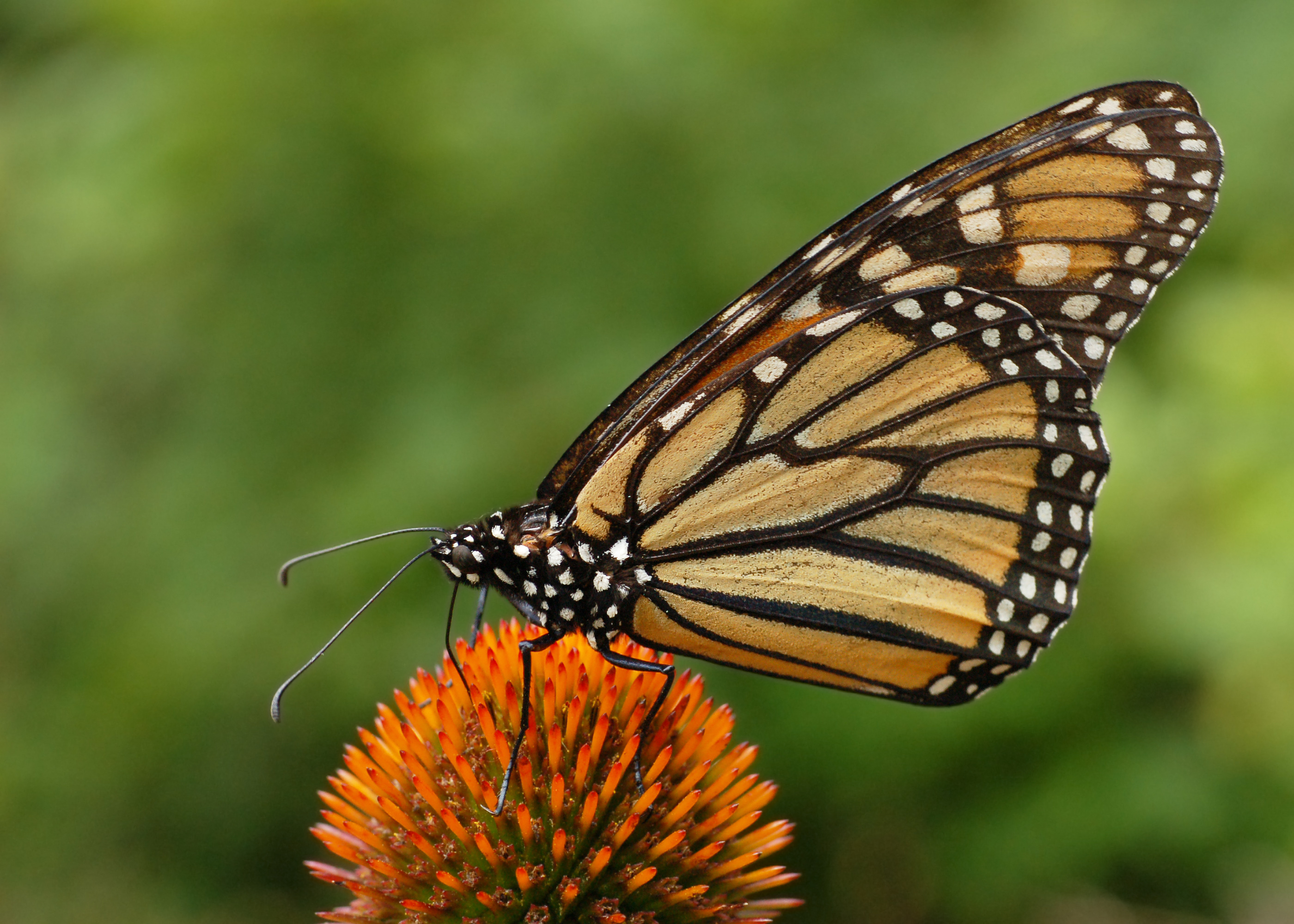
The monarch butterfly (Danaus plexippus) is the most widely recognized migratory butterfly in Canada. Its larvae feed exclusively on milkweed species (Asclepias spp.), and the plant's toxins — cardenolides — are sequestered by caterpillars to make both larvae and adults unpalatable to many predators.

In Canada, monarchs use primarily common milkweed (Asclepias syriaca) and butterfly weed (Asclepias tuberosa) as larval hosts. The range of milkweed availability in southern Ontario and Quebec directly influences the size of the annual monarch generation that reaches Mexican overwintering sites.
| Milkweed Species | Range in Canada | Habitat | Notes |
|---|---|---|---|
| Asclepias syriaca (common milkweed) | Ontario, Quebec, Atlantic | Roadsides, old fields, disturbed areas | Spreads vigorously; most important larval host |
| Asclepias tuberosa (butterfly weed) | Southern Ontario | Dry, sandy soils; full sun | Orange flowers; deep taproot; slow to establish |
| Asclepias incarnata (swamp milkweed) | Ontario, Quebec | Wet meadows, pond margins | Pink flowers; tolerates wet or average soil |
Swallowtail Butterflies
Canada has several swallowtail species, each with distinct host plant requirements. The Canadian tiger swallowtail (Papilio canadensis) is the most widespread native swallowtail and uses a broader range of host plants than many relatives.
| Swallowtail Species | Primary Host Plants | Range |
|---|---|---|
| Canadian tiger swallowtail (P. canadensis) | Trembling aspen, white birch, cherry species | Boreal and temperate zones coast to coast |
| Eastern tiger swallowtail (P. glaucus) | Wild black cherry, tulip tree, ash | Southern Ontario, extreme southwestern Quebec |
| Spicebush swallowtail (P. troilus) | Spicebush (Lindera benzoin), sassafras | Southern Ontario |
| Anise swallowtail (P. zelicaon) | Native apiaceae: cow parsnip, wild carrot relatives | British Columbia, Alberta |
Host Plants for Native Bees
Canada has roughly 800 native bee species, from familiar bumblebees to small metallic sweat bees and specialist mining bees. While many are generalist foragers, a notable proportion are pollen specialists that depend on specific plant families.
Sunflower Specialist Bees
Several Andrena and Melissodes species collect pollen almost exclusively from plants in the sunflower family (Asteraceae). In Canadian gardens this includes native coneflowers (Echinacea), black-eyed Susan (Rudbeckia), and sunflowers (Helianthus). Removing these plants from a yard can eliminate the food source for several specialist bee species.

Willow and Poplar Specialists
Early-flying Andrena species — particularly the willow bee (Andrena fulva) and related taxa — depend on willows for their pollen supply. Willows flower very early in spring, often before most perennials emerge, making them a critical gap-filler in the early-season bloom calendar.
Squash Bees
The eastern squash bee (Peponapis pruinosa) is a North American native that collects pollen exclusively from cucurbit flowers — squash, pumpkins, and gourds. It nests in the soil at the base of cucurbit plants and emerges at dawn before managed honeybees become active.
Key Host Plant Summary
| Plant | Host for | Also Supports (Nectar/Pollen) |
|---|---|---|
| Asclepias syriaca (common milkweed) | Monarch butterfly | Milkweed bees, bumblebees |
| Salix spp. (native willows) | Specialist Andrena bees | Queen bumblebees (early pollen) |
| Wild black cherry (Prunus serotina) | Tiger swallowtails, 200+ moth species | Native bees (spring bloom) |
| Trembling aspen (Populus tremuloides) | Canadian tiger swallowtail | Early-season bee pollen source |
| Rudbeckia spp. (black-eyed Susan) | Silvery checkerspot butterfly | Sweat bees, mining bees, beetles |
| Spicebush (Lindera benzoin) | Spicebush swallowtail | Native bees (early spring flowers) |
Trees and Shrubs as Host Plants
Trees often host far more insect species than herbaceous plants and represent long-term habitat investments. Oaks (Quercus spp.) support hundreds of caterpillar species in eastern North America. Even a single native oak in a suburban yard can significantly increase the site's biodiversity value compared to any mix of herbaceous plants alone.
Native cherries, serviceberries, and viburnums all combine larval host value with nectar and fruit production, making them high-value plants for habitat-focused gardens.